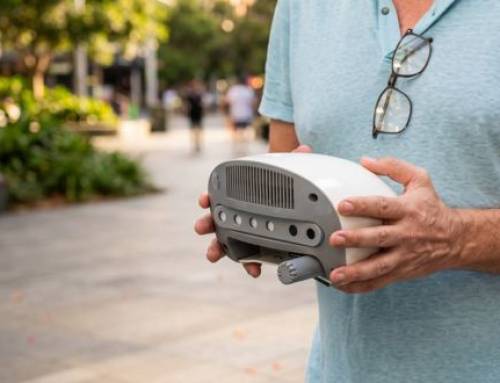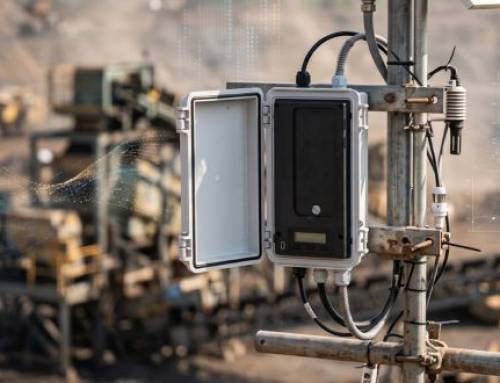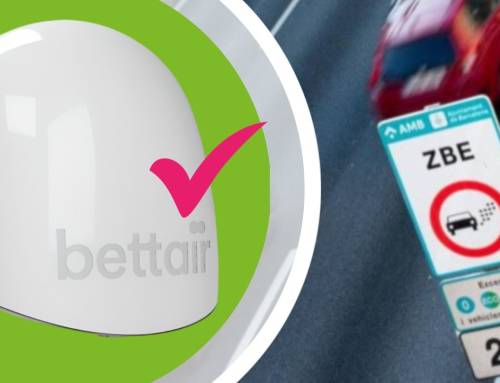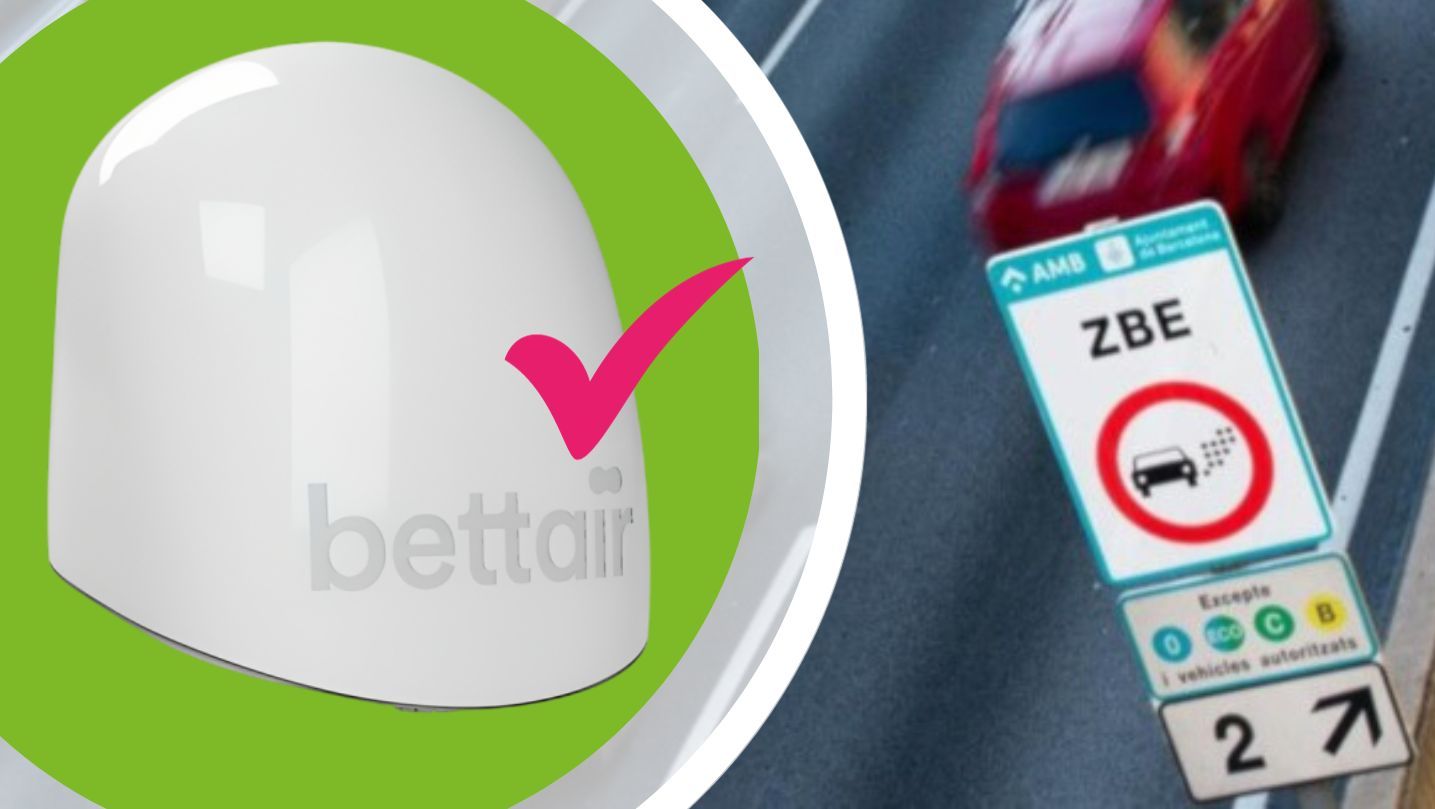

Independently evaluated across three continents and four different environments, Bettair achieved the best overall results in the main AIRLAB 2025 evaluations. The technology is already deployed in more than 100 cities across more than 30 countries.
The fifth edition of the AIRLAB Microsensors Challenge, organized by AIRLAB Solutions and Airparif, has concluded with outstanding results for Bettair: nine awards following several months of independent evaluation under real-world conditions.
In this edition, 47 microsensor models from Africa, North America, Asia and Europe were evaluated under different environmental conditions, pollution levels and emission sources.
The outdoor evaluations took place in Paris (France), Accra (Ghana) and Bangalore (India). For the first time, the Challenge also introduced a completely different environment: underground railway stations in the Île-de-France region.

Bettair achieved the best overall result in the Outdoor Air Monitoring evaluations in France, Ghana and India, as well as the best overall result in the new underground railway environment.
Four environments. Four best overall results.
These results were complemented by five additional awards in different categories, bringing Bettair’s total to nine AIRLAB 2025 awards.
Independent validation that goes beyond accuracy

One of the key strengths of the AIRLAB Microsensors Challenge is that technologies are evaluated under conditions that are close to their intended real-world use.
The evaluation does not focus solely on accuracy. Depending on the use categories, it also considers factors such as utility, usability, cost and environmental footprint.
Temperature, humidity, pollution levels, emission sources and environmental characteristics can all influence the performance of any monitoring technology.
The real significance of these nine awards therefore lies not simply in their number, but in the fact that the same technology demonstrated strong performance across different continents, climates and application environments.
For cities, public authorities, network operators, industries and infrastructure operators, this type of independent evaluation provides a particularly valuable reference when selecting technologies for real-world projects.
From AIRLAB 2023 to 9 awards in 2025
These results are not an isolated achievement.
In AIRLAB 2023, Bettair was already recognized for the high accuracy of its multiparametric technology for outdoor monitoring following evaluations carried out in Paris and Bangkok.
Two years later, AIRLAB has considerably expanded the geographical scope and range of evaluation conditions.
And Bettair has once again achieved strong results.
Particularly significant is the result obtained in underground railway stations, a new environment introduced for the first time in this edition. It opens up new possibilities for air quality monitoring in metro systems, railways, stations and other transport infrastructure.
More than 100 cities in over 30 countries
These results are not an isolated achievement.
In AIRLAB 2023, Bettair was already recognized for the high accuracy of its multiparametric technology for outdoor monitoring following evaluations carried out in Paris and Bangkok.
Two years later, AIRLAB has considerably expanded the geographical scope and range of evaluation conditions.
And Bettair has once again achieved strong results.
Particularly significant is the result obtained in underground railway stations, a new environment introduced for the first time in this edition. It opens up new possibilities for air quality monitoring in metro systems, railways, stations and other transport infrastructure.
Independently validated. Deployed internationally. Tested in the real world.
Barcelona and Catalonia: distributed monitoring at territorial scale
One of the most representative examples can be found in Barcelona and the surrounding region.
As part of the Low Emission Zones project led by the Autoritat del Transport Metropolità (ATM), Bettair technology has been deployed across several Catalan municipalities, including Terrassa, Lleida, Mataró, Rubí, Granollers, Mollet del Vallès, Manlleu and Sitges.
In cities such as Granollers, with 11 units, and Terrassa, with 6, distributed monitoring provides multiple observation points within the same municipality. These deployments are complemented by installations in Lleida, Mataró, Rubí and other municipalities.
The project demonstrates one of the major advantages of these new networks: significantly increasing the spatial resolution of environmental information and understanding how air quality varies between different locations within the same territory.
From Rome to New York, São Paulo and Madrid

Rome
Bettair participated in the European MappingAir project, funded by Horizon 2020, deploying a network designed to provide high-spatial-resolution air quality information in a particularly complex urban environment.

New York
dnota Air Quality Corp. deployed Bettair technology in Queens and the Bronx as part of the Environmental Tech Lab, enabling its performance to be evaluated under real-world urban conditions.

São Paulo
dnota and Bettair continue to expand their presence in Latin America through the São Paulo Innovation ecosystem and new environmental monitoring applications.

Madrid
Bettair has participated in projects with very different characteristics, such as environmental monitoring during the construction of the new MADRING Formula 1 circuit, monitoring both air quality and environmental noise.
These projects are joined by new contracts and awards, such as the recent Ciudad Real project, further strengthening Bettair’s presence in urban air quality monitoring networks.
These are not simply different cities.
They are different needs and applications addressed through the same technology platform.
One technology for multiple sectors
The experience accumulated and the results of AIRLAB 2025 reinforce Bettair’s potential far beyond Smart Cities.
The experience accumulated and the results of AIRLAB 2025 reinforce Bettair’s potential far beyond Smart Cities.
Distributed monitoring enables new applications across cities and Low Emission Zones, industry, construction, ports and logistics, airports, metro and railway systems, major infrastructure and events.
Across all these fields, there is a common need: more environmental information, at more locations, with sufficient data quality to turn data into actionable decisions.
And precisely this diversity of environments in which Bettair has been evaluated and deployed is one of the distinctive elements of its track record.
For dnota, the future of air quality monitoring is not about choosing between reference instrumentation and new technologies.
It is about integrating them.
Official monitoring stations remain fundamental for ensuring the highest level of metrological quality and traceability. Distributed networks can complement them by multiplying observation points and providing a level of spatial resolution that is difficult to achieve using conventional instrumentation alone.
This integrated approach is part of dnota’s technology offering.
We work with some of the leading international manufacturers in the sector, including Thermo Scientific analyzers for reference stations and cabins, Digitel particulate matter samplers and Synspec chromatographs, together with Bettair for high-resolution distributed networks.
The integration of these technologies with meteorological data, communications, data platforms, modelling, analytics and Artificial Intelligence enables the development of a new generation of air quality networks.
Networks capable not only of measuring, but also of better understanding what is happening, identifying patterns, anticipating situations and supporting decision-making.
Measure. Understand. Predict. Act.
Nine awards. More than 100 cities. More than 30 countries.
For Bettair and dnota, the nine AIRLAB 2025 awards represent much more than international recognition.
They are a new independent validation of a technology developed over many years, evaluated under highly diverse conditions and now operating in real-world projects around the world.
Independently validated. Deployed internationally. Tested in the real world.
Because the future of air quality is not simply about installing more sensors.
It is about having high-quality data where it is needed and transforming that data into useful information to support better decisions.
Would you like to improve air quality monitoring in your city, industry or infrastructure?
Contact dnota. We design and integrate solutions tailored to each project, from reference instrumentation to high-resolution distributed networks.